
Key takeaways
- A mobile or direct dial reaches the person. A main line reaches reception.
- Filter for people with a number before you spend a contact.
How do you find someone's mobile number?
- Decide who to call. Owners and field roles answer mobiles. Office roles more often have a direct dial.
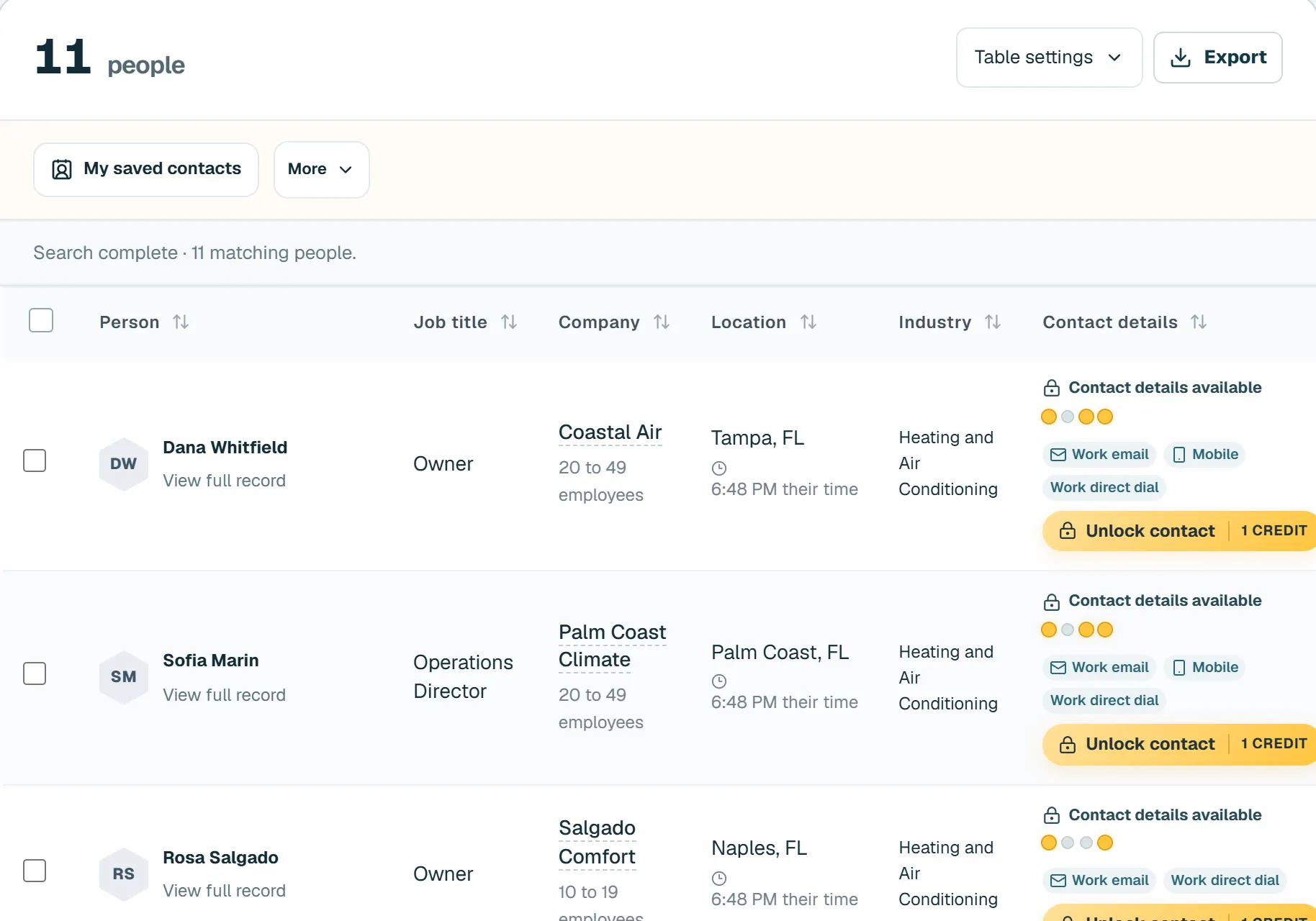
- Require a phone. Use the contact details filter so every result has a number.
- Reveal only who you will call. In Buzzlist you never use a contact on a person with no email or phone.
- Scrub, then dial. Check numbers against the National Do-Not-Call Registry and your own do-not-call list. Source: FTC Dial by hand unless you have consent for automated calls or texts.
| Number type | What it reaches | Typical use |
|---|---|---|
| Mobile | The person, anywhere | Owners, field and trades roles |
| Direct dial | The person's desk line | Office roles |
| Main line | Reception or a phone tree | Last resort |
What are the US calling rules?
The Telephone Consumer Protection Act limits calls and texts to mobiles made with an autodialer or a recorded voice unless you have consent. Mobiles on the National Do-Not-Call Registry are treated as residential, which can include an owner's own cell, and the rules cover marketing texts too. States add their own rules. This is general information, not legal advice.
Sources
Checked October 9, 2026. Rules change, so read the source before you rely on it. This is general information, not legal advice.
